

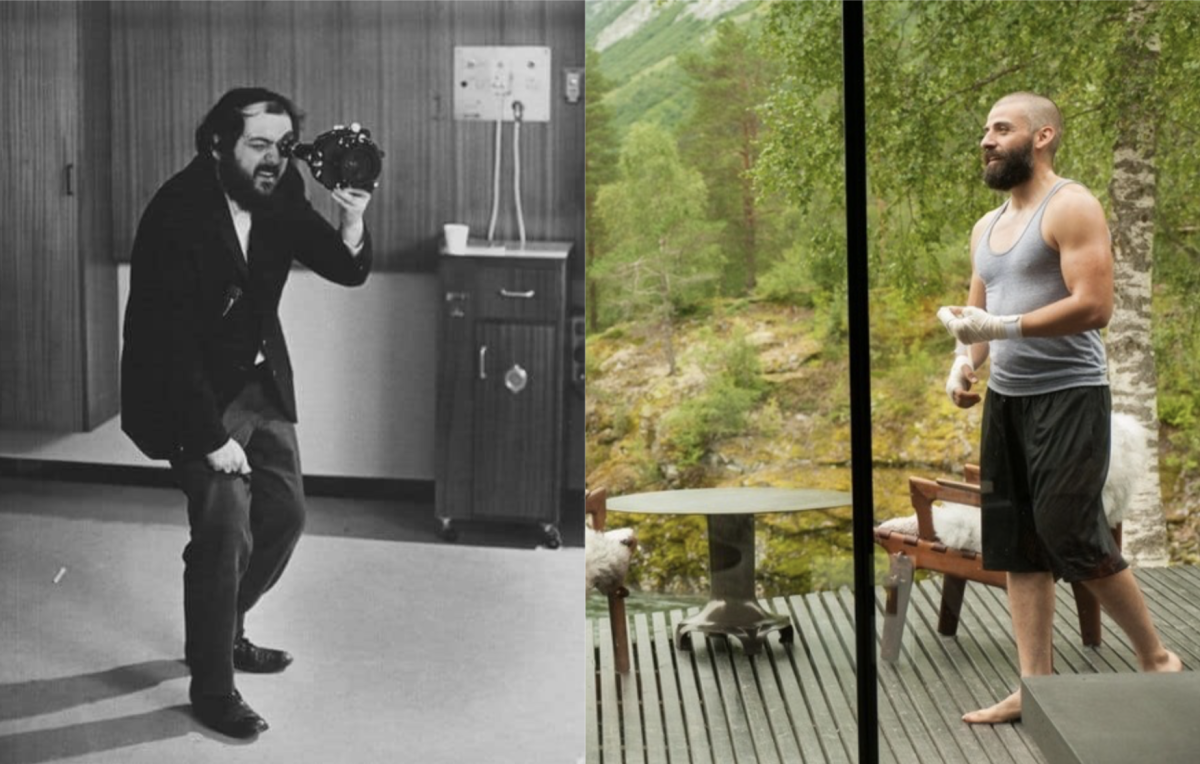
In the 2014 film “Ex Machina,” writer-director Alex Garland created one of science fiction’s most fascinating characters in Nathan Bateman, a genius tech CEO obsessed with controlling everything and everyone around him.
Garland was inspired by Stanley Kubrick when developing the character, as Kubrick was known for obsessively maintaining control when making his films. We see shades of Kubrick both visually and psychologically in Nathan. His beard, glasses, and intellectual intensity all feel very much like the legendary director.
But the deeper connection between the two figures lies in the idea of control. Not only did Kubrick become famous for masterpieces like “2001: A Space Odyssey” and “The Shining” but also for his obsessive management of every detail of filmmaking.
Kubrick was known for exhausting preparations, endless takes, and demanding perfection from everyone working on his films. Whether it was the acting, the camera work, the lighting, or the sound, every element of his filmmaking had to be completely true to his vision. He was extremely controlling, but that’s what make his films great.
Garland built Nathan’s character using a similar blueprint. In “Ex Machina,” Nathan controls his high-tech house, its security systems, and the experiment that’s central to the film’s plot. Like Kubrick, he believes the success of his work, the development of humanoid A.I. robots in this case, comes from controlling things others don’t even see or think of.
But Garland uses Nathan to explore what happens when control becomes an illusion. The tension of “Ex Machina” is not only about whether artificial intelligence can become conscious; it is also about whether humans can truly control the intelligence they create.
Nathan believes his masterpiece robot, Ava, is a machine operating the way he programmed her. Instead, Ava gradually shows that she understands emotions, that she’s able to manipulate, and that she can make choices on her own.
By the film’s conclusion, Nathan realizes too late that he doesn’t fully understand what he created.
That is the difference between Nathan and Kubrick. Kubrick’s obsessive control helped him create some of the best films ever made because the filmmaking process was something Kubrick was capable of controlling. Nathan, on the other hand, believed he was in control of his creation when, in reality, he wasn’t.
In the end, Garland uses the Kubrick-inspired Nathan character as a warning that human geniuses may create incredible technology, but that genius alone does not guarantee the ability to control it.