


During the 1970s and early 80s, technology constantly changed and evolved, causing lifestyle shifts and bringing new experiences into the world. While analyzing the facts and statistics can lead to a general understanding of the time period, it is also important to understand how the lives of everyday people were impacted.
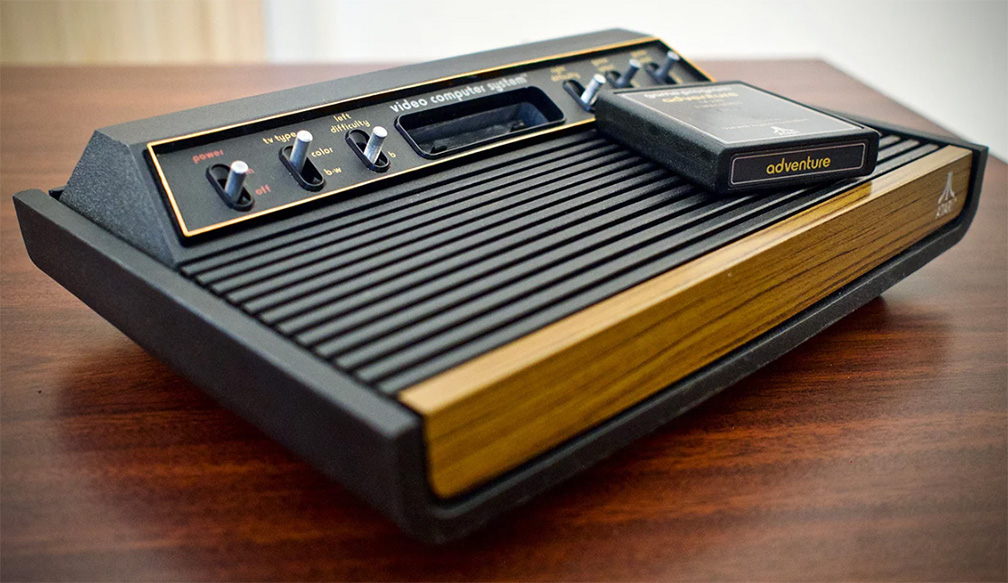
For example, while one could comprehend the changes to the entertainment industry with analysis of historical facts, a personal account is necessary to understand the real opinions of the public. The release of the Atari 2600 is clearly important when analyzed through an objective, clinical lens, but is better understood as a momentous event when a personal account reveals the effects it had on the daily lives of ordinary people.
Examining only the facts would demonstrate how it introduced new technology and kickstarted the video game industry; however, the words of the first generation with access to video games reveal how the release of the Atari 2600 led to a change in how the public related to and understood computers.
One of the reasons that the release of the Atari 2600 is a momentous event is because it created a new home video game industry. Home entertainment at the time was limited to television, which was prevalent. Television was very entertaining, but it was limited by time constraints and the variety of channels.
When arcade video games, such as Pong, first came out, they were quite interactive and thus incredibly popular. As Dustin Hansen writes in Game On! Video Game History from Pong and Pac-Man to Mario, Minecraft and More, “Everybody loved Pong, and soon people were lining up,…waiting outside to ambush Pong and give it another go” (4).
Pong, Atari’s first game, raised the popularity of both the company itself and the new video game market. This growth facilitated the release of the Atari 2600 five years later. Other video game companies also wanted to join in on the home video game craze. In The 70’s, Dan Epstein mentions Atari’s success and how it inspired similar companies “to [dip] their joysticks into the home video game market” (35).
Companies such as Coleco, Mattel, and Midway made their own video game systems. None of these, however, none of these were nearly as popular as Atari until Nintendo came along in the 80s. While the video game industry may not seem significant, it is important to understand that, even in its earliest years, it was a multi-billion dollar industry. Because of its influence on both the American and global economy, the release of the Atari 2600 can most definitely be considered a momentous event; however, this influence is not the only reason.
The release of the Atari 2600 can also be considered momentous because it introduced new technology. While television graphics and computers seemed rudimentary, especially compared to the technology of today, the Atari 2600 combined the two in a way never before seen. As written in Artifacts from Modern America, Helen Sheumaker indicates the effect that the Atari 2600 had on the perspectives of regular people, claiming that it “changed the ways Americans interacted with the home computer as well as with their television sets” (81).
Most people at the time viewed computers as foreign and overwhelmingly confusing since computers were very new and only accessible to the people designing them. The Atari 2600 transformed the computer from an alien technology into an accessible, more human device that average people could interact with. It introduced people to the computer in an easy-to-understand way, contributing to the spread of personal computers into homes. While the technology of the Atari 2600 eventually became obsolete, its influence on the way ordinary people saw and understood computers makes its release a momentous event.
Facts can provide a substantial amount of insight into any historical development, but they lack the human perspective found in a personal account. Personal accounts reveal how everyday, ordinary people feel about an event, not just people in power or famous individuals.
Children living during the 1970s can most clearly relate how they were affected by the release of the Atari 2600. Kevin O’Toole was five-years-old when the console came out in 1977, though he and his sisters did not receive one until Christmas the next year. Though he was very young at the time, he still remembers vividly the games that he would play and the effects they had on his daily life.
As O’Toole remembers, “Overnight it seemed like all anyone did was play Atari.” The console was an instant success, kicking off the home video game industry. O’Toole still has memories of the effects it had on his daily life. He says, “It changed our habits. . . . Gone was ‘waiting for something to come on the TV.’ Now, you could play a game as much as you wanted. You could also take [the Atari 2600] to a friend’s house or take cartridges with you. . . . entertainment was forever changed.”
One of the Atari 2600’s biggest effects was its influence on the entertainment industry. This change can only truly be understood by a person who was alive at the time and saw how the population, especially children, changed its focus from television to video games. O’Toole offers a unique first-person view into the shift of the industry.
Kevin O’Toole also describes how the Atari 2600 affected how he understood computers as a child. He recalls, “It was my only interaction [with computers] at that point. I said I thought . . . as a 6 year old . . . that there was a keyboard under the console. We didn’t have a home computer for another 4 or 5 years, and I had school computers in 3rd or 4th grade. What the Atari did was make your imagination run.”
When computers were still so foreign at the time, the Atari 2600 made them accessible in such a way that even children were curious. The Atari 2600 inspired the next generation of computer engineers and video game designers. It established a curiosity in the minds of children and let them interact with a computer even though computers were still rare. O’Toole’s account offers clear insight into both the changing economy and new technology introduced by the Atari 2600 that influenced society during his childhood.
The Atari 2600 is truly the ancestor of all other video games. While later consoles featured better graphics, mechanics, and hardware, the Atari was the set example to follow. Like all technology, it eventually became obsolete; however, its “genetic code” is visible in its descendants today.
Even the newest, most advanced controllers still use joysticks. The latest games, though they are more complex, are rooted in the ideas found in Adventure, Pac-Man, Pitfall!, and Space Invaders. Virtual reality, even as the most progressive development in video games, contains hints of the Atari 2600. The Atari 2600 popularized video game categories such as platformer, adventure, fighting, and first-person shooter, which continue to be the most popular genres.
Like all ancestors, the Atari 2600 was forgotten. But its legacy is found in both the consoles that followed it and the memories of the children who loved it so much.
Epstein, Dan. The 70’s. Chelsea House Publishers, 2001.
—. The 80’s. Chelsea House Publishers, 2001.
Hansen, Dustin. Game On! Video Game History from Pong and Pac-Man to Mario, Minecraft, and More. Macmillan Publishing Group, 2016.
O’Toole, Kevin Burke. E-mail interview. Conducted by Mary Elaine O’Toole, 17 Apr. 2026.
Sheumaker, Helen. “Atari 2600 Video Game Console and Packaging.” Artifacts from Modern America, Greenwood, 2018, pp. 78-83. Daily Life through Artifacts. Gale eBooks, link.gale.com/apps/doc/CX7415800026/GVRL?u=atla90763&sid=bookmark-GVRL&xid=a17d2d49. Accessed 16 Apr. 2026.