

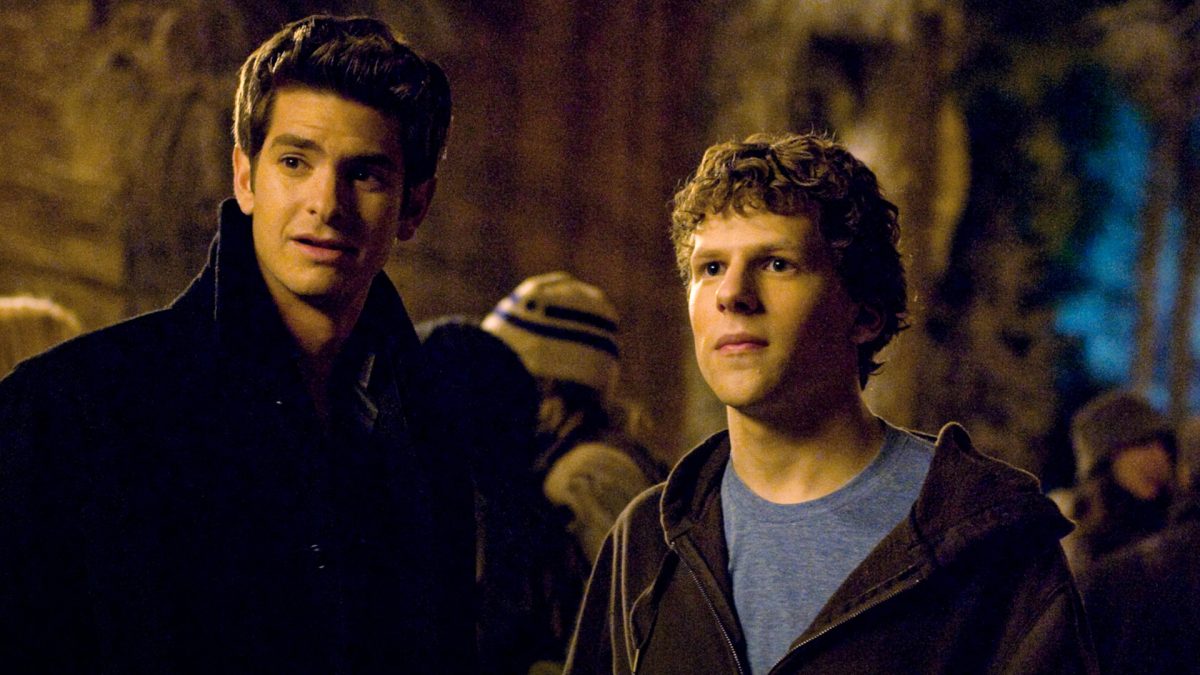
“You don’t get to 500 million friends without making a few enemies.”
David Fincher’s 2010 film, The Social Network, remains one of the most important and influential films of the twenty-first century. Throughout the film, we see how a young Mark Zuckerberg navigates a turbulent journey of friendship, sacrifice, and betrayal.
To this day, the film is still one of the most realistic depictions of the price of success and the consequential decisions one must make to achieve it. Ultimately, the film argues that ambition often comes at the cost of loyalty, transforming friendship into betrayal in the pursuit of success.
From its opening moments, The Social Network establishes an atmosphere of isolation and competition. Set within the prestigious atmosphere of Harvard University, the film presents a world driven by status and achievement rather than genuine connection.
Fincher’s dark and moody cinematography, combined with the masterfully crafted score by Trent Reznor and Atticus Ross, creates a tension that accentuates the strained relationships we encounter throughout the film.
But what really sets this film apart for me is the script by Aaron Sorkin. Sorkin’s dialogue has a mesmerizing quality that keeps the viewer glued to every conversation. With standout performances from actors Jesse Eisenberg, Andrew Garfield, and Armie Hammer, Sorkin’s script comes to life in a way that feels authentic to the true story it’s based on.
The result is a film that captures your imagination in the opening scene and keeps it until the closing credits.
The central theme of the film is how ambition to succeed and achieve status can cause one to lose sight of what’s important in life, even to the extent of losing one’s self. The film’s protagonist, Mark Zuckerberg, experiences this dislocation on many levels throughout the story.
A conversation around Mark’s desire to belong to an exclusive club leads to his girlfriend breaking up with him. This breakup is the catalyst for him starting what will ultimately be Facebook. But along the way his relationship with his best friend, Eduardo Saverin, is also heavily tested.
Throughout the film, we see the direct correlation between the rise of Facebook and the breakdown of Mark’s most valued relationships. Ultimately, you get the sense that Mark’s relationship with himself, and his own identity, comes into question.
It’s hard to imagine that when David Fincher was first asked to consider directing The Social Network, he wasn’t sure if he was right for the project. Little did he know he was about to make one of the best films of his career.