

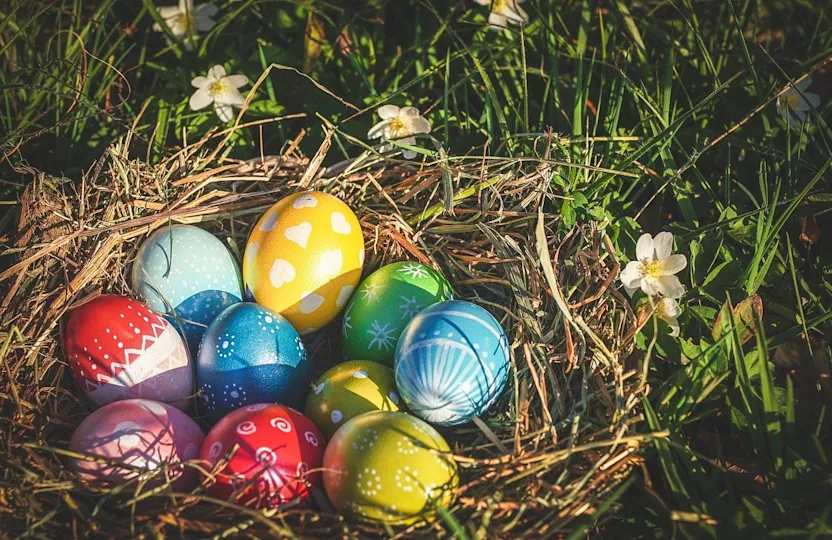
Easter is full of fun traditions, like waking up to baskets of candy, searching for the Easter Bunny, and decorating colorful eggs. But behind all the excitement, there is a deeper meaning that many people don’t think about.
Decorating Easter eggs is not just a fun activity; it has been an important part of Christian history for centuries. The eggs carry symbolism that connects directly to the story of Jesus and the celebration of Easter itself.
Easter egg decorating actually connects directly to the story of Jesus in the New Testament.
In the early church, eggs were used as a symbol of the resurrection. The hard shell represented the sealed tomb of Jesus and cracking the egg symbolized His rising from the dead.
During Lent, a 40-day period of fasting, Christians traditionally gave up heavier foods like meat and eggs. Because of this, Easter Sunday was the first day they could eat eggs again, making them a meaningful part of the celebration.
The eggs were not only a way to break the fast but also a reminder of new life and hope for believers.
Christians also decorated eggs by dyeing them. Early Christians dyed eggs red to represent the blood of Jesus. Over time, more colors were added, each with its own meaning.
Yellow came to represent new life and resurrection while blue symbolized the love of God. In some communities, eggs were even painted with scenes from the Bible.
These decorated eggs were not just for showcase; they were a way to teach people the story of Jesus, especially at a time when many were illiterate. Hiding the eggs for children to find also became a fun way to involve families while passing on these traditions.
There are also stories that help explain the tradition. One popular story tells of Mary Magdalene bringing an egg to a Roman emperor to show that Jesus had risen. When the emperor doubted her, the egg is said to have turned red. Families in some parts of the world still crack red eggs together while saying, “Christ is risen,” as a way to celebrate and remember the story.
Decorating Easter eggs is more than just a fun activity for kids. It is a tradition rooted in Christian history and belief. Even today, while many people enjoy it as part of the holiday, it continues to represent the story of Jesus, the resurrection, and the new life that Easter celebrates.
By keeping these traditions alive, families are not only having fun; they are connecting with centuries of Christian history and faith.