

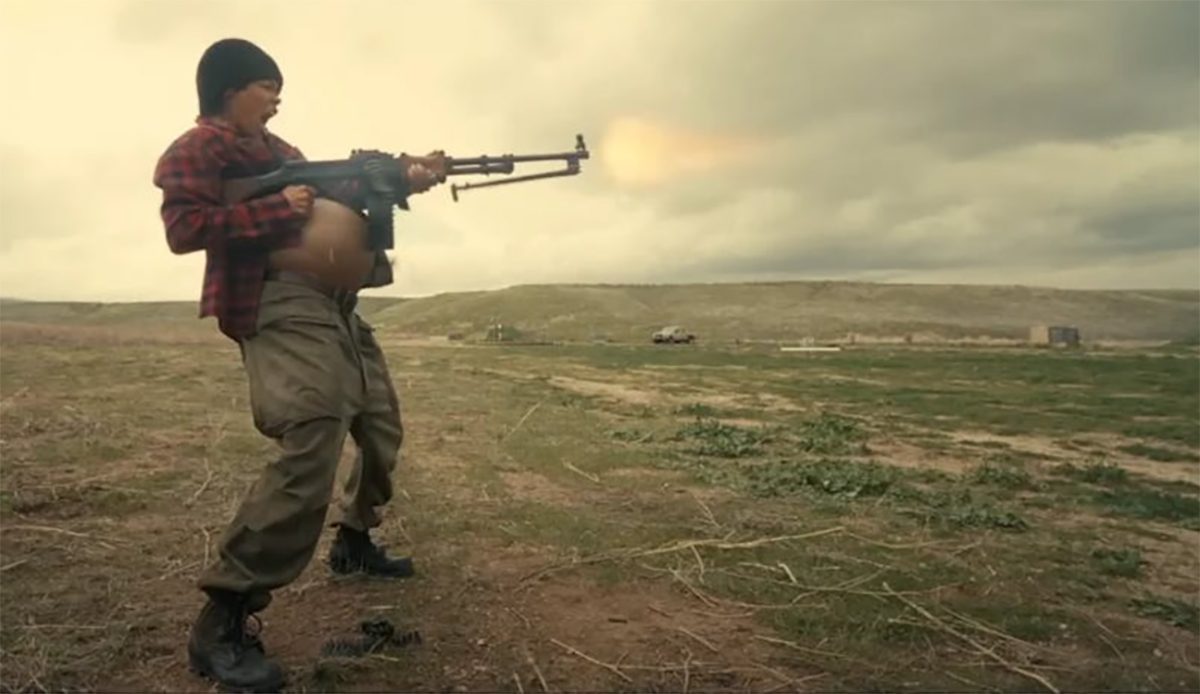
During a recent viewing of Paul Thomas Anderson’s new film, I was left not only satisfied by the masterfully crafted display of art that I expected from a director of his stature but also ignited.
The film sparked something within me, and within the group that I watched it with. It stirred a sense of political conviction, provoking within me a back-and-forth dispute about our current times and its problems.
In an eerily familiar alternate version of our reality, One Battle After Another traverses revolutions, uprisings, and the intertwined relationships among them all. A perfectly dropped film for a time of fervent political tension – more hate-filled, conflicted, and radical than anything previously seen.
Our initiation begins as we find ourselves on a humanitarian heist, rescuing immigrants from a detention center.
I would be remiss not to mention Jonny Greenwood’s accompanying score: blistering, bold, and spirit-emboldening, perfectly capturing the revolutionary fervor and fueling of this roaring experience.
The next two hours and fifty minutes are filled with a fast-paced, propulsive political telling of our current world, filtered through a satirical lens aimed at both ends of the political spectrum. Despite this, moments of hope appear, real passion, encapsulating one of the film’s central themes: fighting for what you believe in.
We are introduced to the French 75, a radical leftist group organizing and carrying out targeted attacks against a corrupt authoritarian government.
Their revolutionary spearhead, Perfidia Beverly Hills, is played wonderfully by Teyana Taylor. Her counterpart, lover, and crime companion, Pat Calhoun (Leonardo DiCaprio), accompanies her on many of the group’s missions in the first act, sharing affection between bomb drops and infiltrations.
Through a complex act of coercion and struggle for power, Perfidia begins an affair with military commander Steven Lockjaw (Sean Penn), a member of the fascist regime she supposedly opposes, and becomes pregnant, giving birth to Charlene. She views motherhood as a hindrance to her revolutionary pursuits and continues her directed attacks, fighting for “the cause.”
As we move further into the story, the once-romanticized, well-intentioned acts of the French 75 begin to falter. A bank heist goes wrong, and the killing of a Black security guard by the liberal group reveals Anderson’s tone. This incident blows apart the French 75, forcing Pat and Charlene to take refuge.
The rest of the film takes place years after this event. It is essentially a stretched-out chase, following DiCaprio’s character, once a radical who fought for change but now a lazy, paranoid father.
He is a shadow of what he once was, relegated to his couch and numbing the pain with various addictions. An ounce of his former power is rekindled as he sets out to regain his daughter, who has been captured by Penn’s sadistic Lockjaw, desperate to erase any trace of his past entanglement with Perfidia.
The film is, no doubt, entertaining, and the scenes with DiCaprio, unsurprisingly, shine. His humor in the film, something we’ve rarely seen so clearly in his other roles, is especially evident here. The characters and performances are top-notch, and this includes what is arguably one of the finest performances of Penn’s already distinguished career.
So I encourage you to go out, watch the movie, and decide for yourself.
I do, however, want to discuss the moments I experienced after my viewing, particular bits that led to insight, and other misleading propaganda that might have exposed you to contrarian lies.
In the case of the French 75’s attacks, the bombings and infiltration of government, these actions represent far more than mere radical terrorism, as some right-wing critics have claimed.
The Black security guard’s death initially marks the critical distinction between necessary revolt against a harsh, tyrannical government and what occurs when radicalism surpasses its original aims. It goes too far, ultimately harming the very people it claims to fight for.
Anderson raises crucial questions through the death of the security guard: What is too much? How far should one go in the pursuit of truth and in trying to right what is wrong? At what point does the honest pursuit of exposing injustice become muddled in the gray area, turning dark, violent, and deadly, thereby mirroring the very oppressors they originally fought against?
When a Black man is killed in the name of justice for minorities, has the pursuit strayed from its original aims?
Throughout the film, both sides are sardonically portrayed for their extreme shibboleths they hold so true and firm. They use their extreme beliefs to justify shocking violence, from “Black power” to “White supremacy.”
No doubt, even a single viewing by a discerning viewer reveals that Perfidia and Lockjaw are not all that different. Extremists, regardless of the political stripe of their ideology, are ultimately driven by a thirst for power, with little concern for who suffers along the way.
Given the tumultuous political terrain that Americans currently navigate, often carefully tiptoeing around sensitive topics, the film’s directness makes for bold and more provocative storytelling.
Inevitably, Anderson’s work acts as a critique. Not necessarily an opportunity to spark helpful-positive dialogue between parties where polite acknowledgments will be formed and congenial concessions will be extended but a general awareness of the extreme absurdities on either end of the political spectrum.
When these extremities and absurd values are duly noted, then and only then can productive conversations begin despite iron-clad political ideologies.
If you haven’t yet seen the film, I urge you to do so, whether or not you view it as an exaggerated, simplistic take on the era or a political drama that perfectly reflects the terrain we currently inhabit. Watch it, and, as Anderson suggests, recognize the absurdities and then converse and debate.
Talk, speak, share, debate, argue. Only then can we come closer together to truly uncover the truth and gain understanding on complex and often conflicting topics.